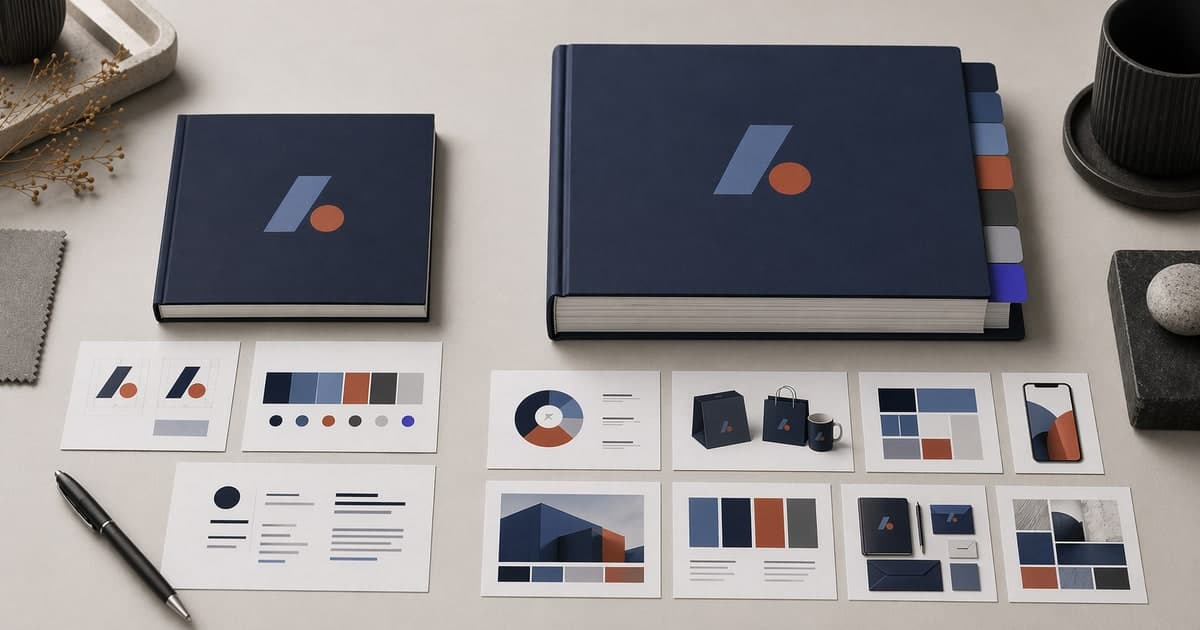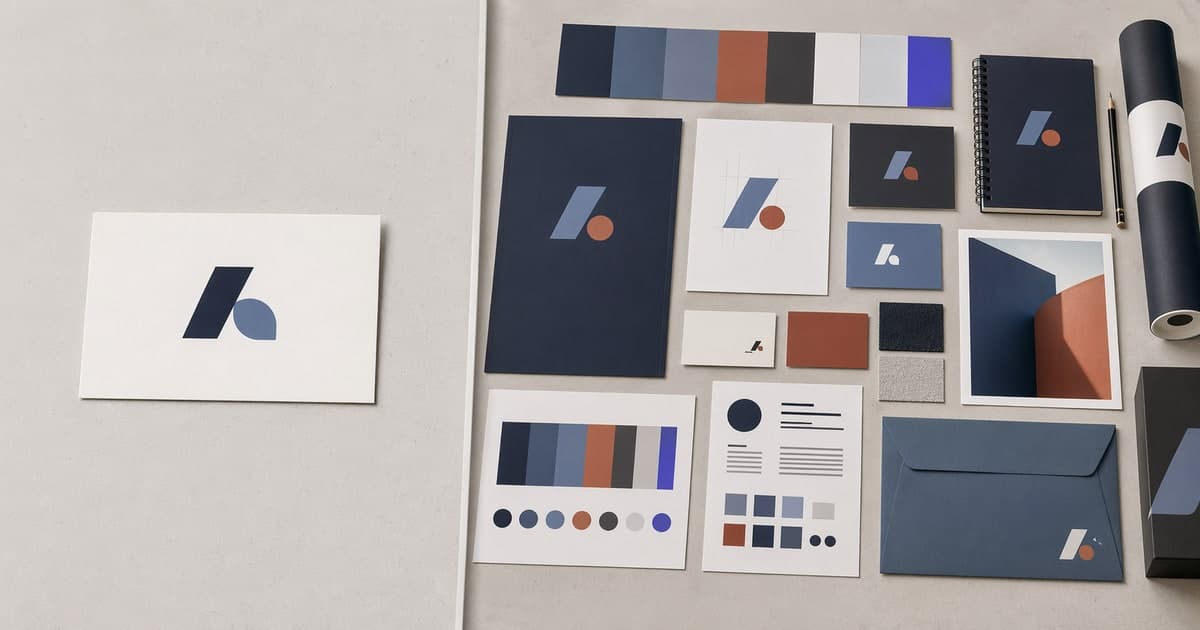
Color is one of the fastest signals the brain processes. Before someone reads a brand name, they often react to the color first.
That is why choosing a palette is not an isolated aesthetic exercise. It is a positioning decision.
What a good palette needs to achieve
- Differentiate your brand
- Communicate a consistent personality
- Preserve readability
- Work in digital and static formats
A simple palette structure
Primary color
This is the most recognizable color in the brand. It should align with the brand’s character and the competitive landscape.
Supporting colors
These expand the system without diluting it. They help create hierarchy, highlight calls to action, and separate sections.
Neutrals
They are essential. Whites, grays, soft blues, or carefully chosen dark tones support the brand without competing with the main color.
Create your professional brandbook in 15 minutes
Define your brand so your originality stays consistent when using AI
How to choose your palette
1. Start with personality
Do not choose color first. Define what you want to communicate: trust, energy, sophistication, warmth, innovation.
2. Study the category
If all your competitors use blue, blue may help you fit in, but not stand out. Sometimes the right choice is to move away from the convention.
3. Test real usage
A beautiful color does not always work for interface design, reading, or contrast. It has to be tested in context.
What to document in the brandbook
- Color name
- HEX
- RGB
- CMYK when relevant
- Usage rule
- Recommended contrast
Common mistakes
- Choosing only by personal taste
- Not checking contrast
- Using too many colors
- Ignoring neutrals
- Letting tones drift across assets
Frequently asked questions
How many colors should a brand have?
Usually 3 to 5: one primary color, one or two supporting colors, and one or two neutrals. More than that often makes consistency harder.
How do I know whether two colors work together?
They need to work in hierarchy, contrast, and real usage. Color theory helps, but you still need to test them in text, buttons, backgrounds, and different screens.
Which color formats should I document?
At minimum HEX and RGB for digital. If you print materials, add CMYK and, when relevant, Pantone.
Create your professional brandbook in 15 minutes
Define your brand so your originality stays consistent when using AI