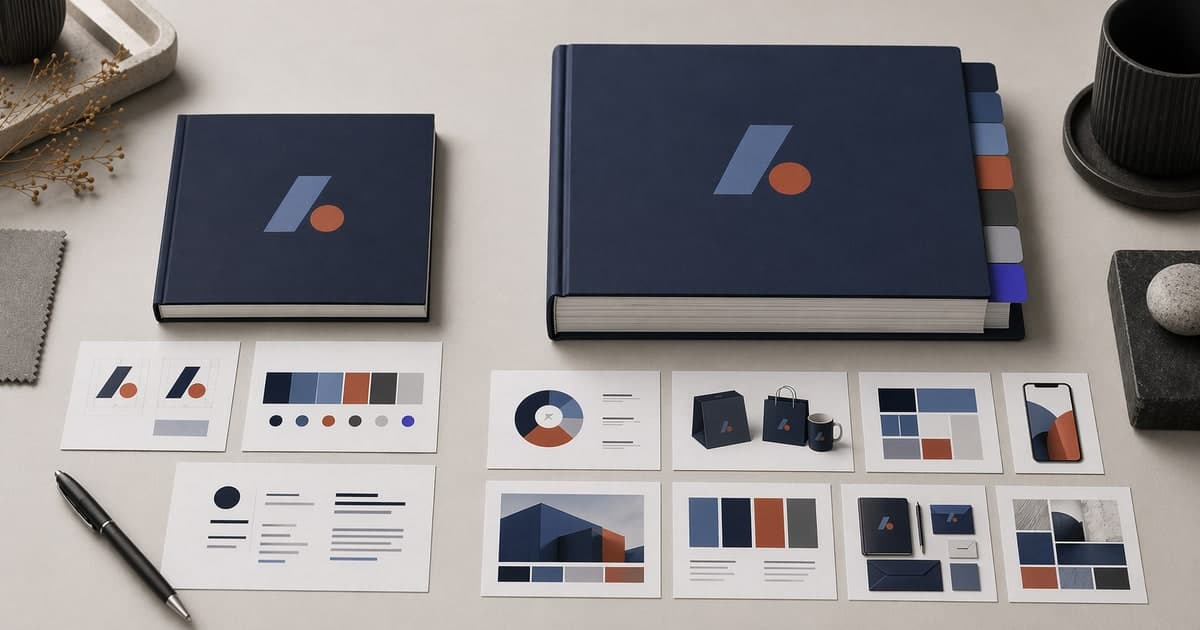
Studying strong brands is useful because it forces you to think in principles instead of preferences. A successful visual identity does not depend on a single element. It depends on how multiple choices align to communicate something recognizable.
What to observe when analyzing a visual identity
- Consistency between logo, color, typography, and imagery
- Differentiation inside the category
- Ease of use across multiple surfaces
- Readability and scalability
- Ability to create memory
10 kinds of references worth studying
1. Minimal brands
They work when clarity is part of the positioning. Restrained systems often win through hierarchy and precision.
2. Technology brands
They often rely on clean systems, sober typography, and colors that communicate precision, trust, or innovation.
3. Premium brands
Detail matters more than quantity. Fewer elements, better executed.
4. Mass-market brands
They need instant recognition. Color and shape usually play a central role.
5. Editorial brands
They are great references for typography, composition, and visual rhythm.
Create your professional brandbook in 15 minutes
Define your brand so your originality stays consistent when using AI
6. Serious B2B brands
They show how to look professional without becoming cold or generic.
7. Lifestyle brands
They are useful for understanding aspiration, tone, and social consistency.
8. Sustainability-led brands
They reveal how to communicate values without falling into visual clichés.
9. Flexible design systems
They help you see how a brand can expand without losing unity.
10. Brands in crowded categories
They are perfect for studying real differentiation.
What to learn from these examples
- Well-executed simplicity wins
- Consistency matters more than the number of visual resources
- The right typography can completely shift perception
- Color works best when it is intentional, not excessive
- Strong identities are guided by criteria, not just style
Common mistake when looking for references
Building a beautiful moodboard without extracting useful decisions. A reference only becomes valuable when it helps you answer: what should we repeat, what should we avoid, and what actually fits our context?
Frequently asked questions
What makes a visual identity successful?
Clarity, coherence, memorability, and the ability to work across different formats. A strong identity does not just look good; it repeats well.
Should I study large brands for inspiration?
Yes, as long as you study the principles behind them instead of copying the surface-level style. What matters is understanding why they work.
Create your professional brandbook in 15 minutes
Define your brand so your originality stays consistent when using AI