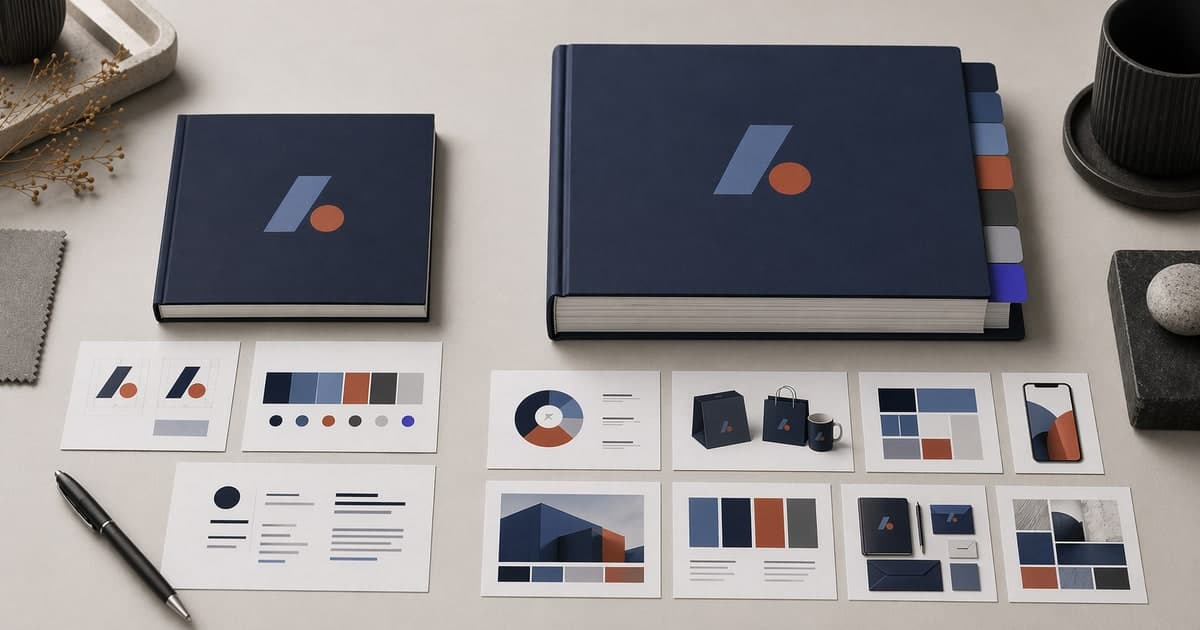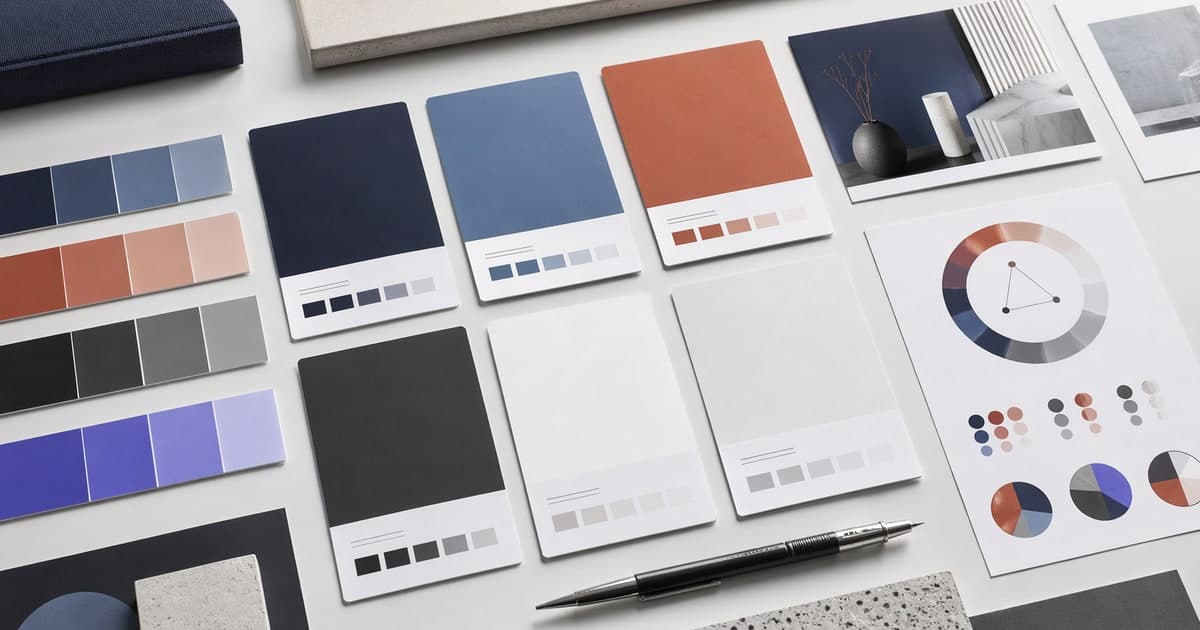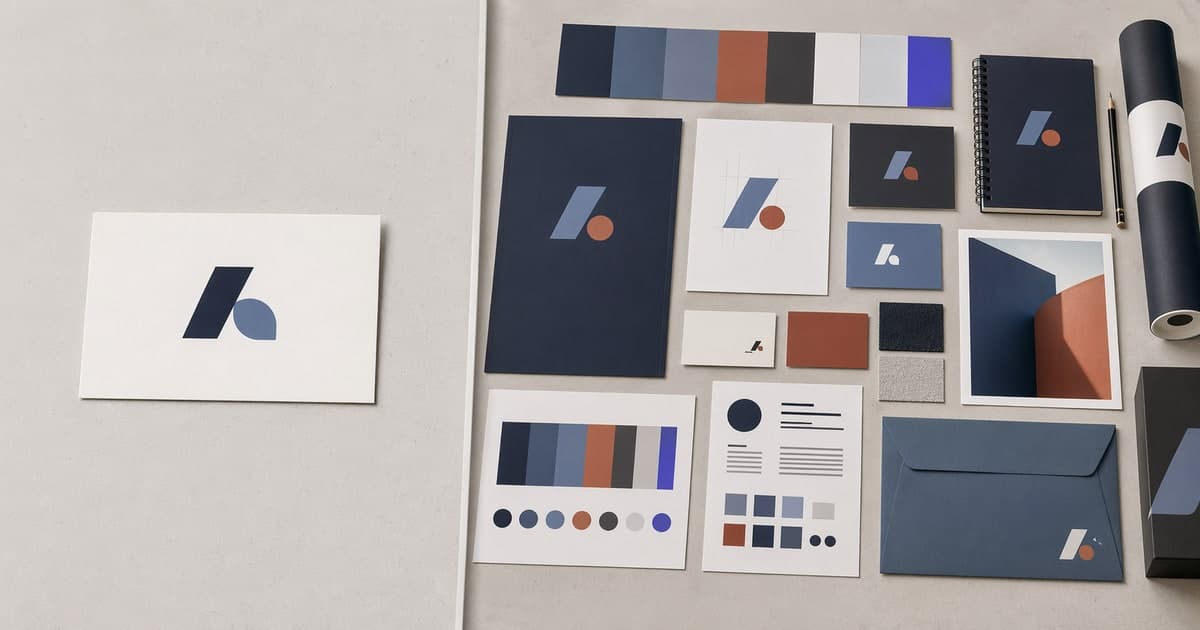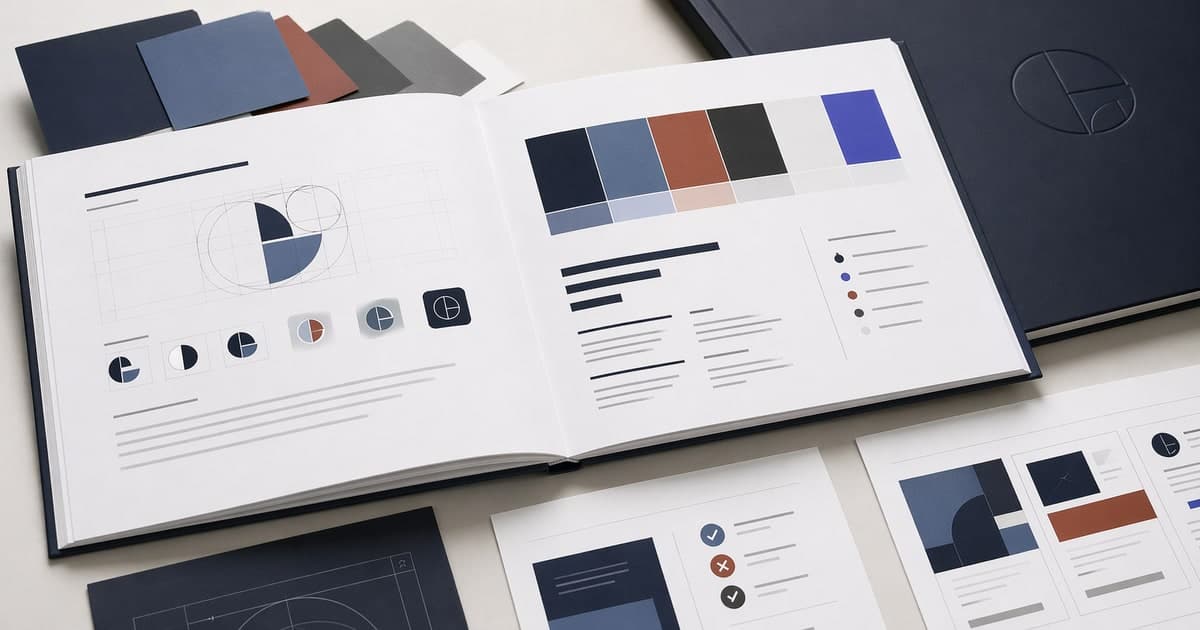
If your team creates different-looking assets every week, if every external partner interprets the brand differently, or if the whole brand still lives “in your head,” you need a brandbook.
A brandbook is not a decorative PDF. It is the document that turns a vague brand into a repeatable system.
What a brandbook is
A brandbook is the central reference for the brand. It gathers the strategic, visual, and verbal criteria that allow your team to create materials, communicate clearly, and make decisions consistently.
It does not need to be huge. It needs to be clear.
What a useful brandbook should include
1. Strategic foundation
Before design, define:
- What problem your company solves
- Who it exists for
- What makes it different
- Which values guide the brand
2. Visual identity
This is where you document:
- Logo and logo variations
- Color palette
- Typography
- Composition rules
- Image style or supporting graphic elements
3. Verbal identity
Your brand also speaks. Define:
- Brand voice
- Tone by context
- Key messages
- Words you use and words you avoid
4. Applications
A brandbook becomes much more useful when it shows the brand in action:
- Website
- Social media
- Presentations
- Sales proposals
- Email signatures or printed materials
Create your professional brandbook in 15 minutes
Define your brand so your originality stays consistent when using AI
A step-by-step process
Step 1. Clarify your positioning
Summarize in a few lines:
- Who your ideal customer is
- What problem you solve
- Why someone should choose you
If this part is blurry, design will be blurry too.
Step 2. Define a visual direction
Choose a clear direction, not just random references. Think about the character you want to communicate: serious, approachable, premium, technical, bold, or minimal.
Step 3. Build the visual base
Select a focused palette, a consistent font pairing, and a logo that works across formats. Prioritize clarity and scalability.
Step 4. Define brand voice
Write concrete examples:
- How the brand introduces itself
- How it explains its offer
- How it calls people to action
Step 5. Document rules and examples
Showing the assets is not enough. Explain how they are used. A good brandbook reduces improvisation.
A simple structure that works
| Section | What it solves |
|---|---|
| Strategy | Aligns the team on promise and positioning |
| Visual | Organizes colors, typography, logo, and design criteria |
| Verbal | Creates consistency in tone, messaging, and copy |
| Applications | Shows how the brand translates into real assets |
Common first-brandbook mistakes
- Making it too long and hard to use
- Defining assets without usage rules
- Leaving out real examples
- Ignoring brand tone
- Focusing only on aesthetics and not operations
Which format makes sense
It depends on the stage of your business:
- PDF: good for sharing and version control
- Figma: ideal for visual collaboration
- Notion: practical for living documentation
- AI tools: fast for creating a consistent first version
The format is not the main decision. The real question is whether your team will use it.
Conclusion
A well-made brandbook reduces noise, speeds up decisions, and improves how your brand is perceived. You do not need one hundred pages. You need clear criteria, useful examples, and a structure the team can apply without depending on the founder every time.
Frequently asked questions
What should a brandbook include?
A useful brandbook usually includes positioning, mission, values, color palette, typography, logo variations, usage rules, brand voice, and real examples of application.
How long does it take to create a brandbook?
It depends on the process. Traditional projects may take weeks. With AI tools and a clear brief, you can build a strong first version much faster.
Do I need to hire a designer to create a brandbook?
Not always. For many startups and small businesses, a well-guided tool can produce a strong professional version. Designers remain valuable for complex systems or deeper rebrands.
Create your professional brandbook in 15 minutes
Define your brand so your originality stays consistent when using AI